
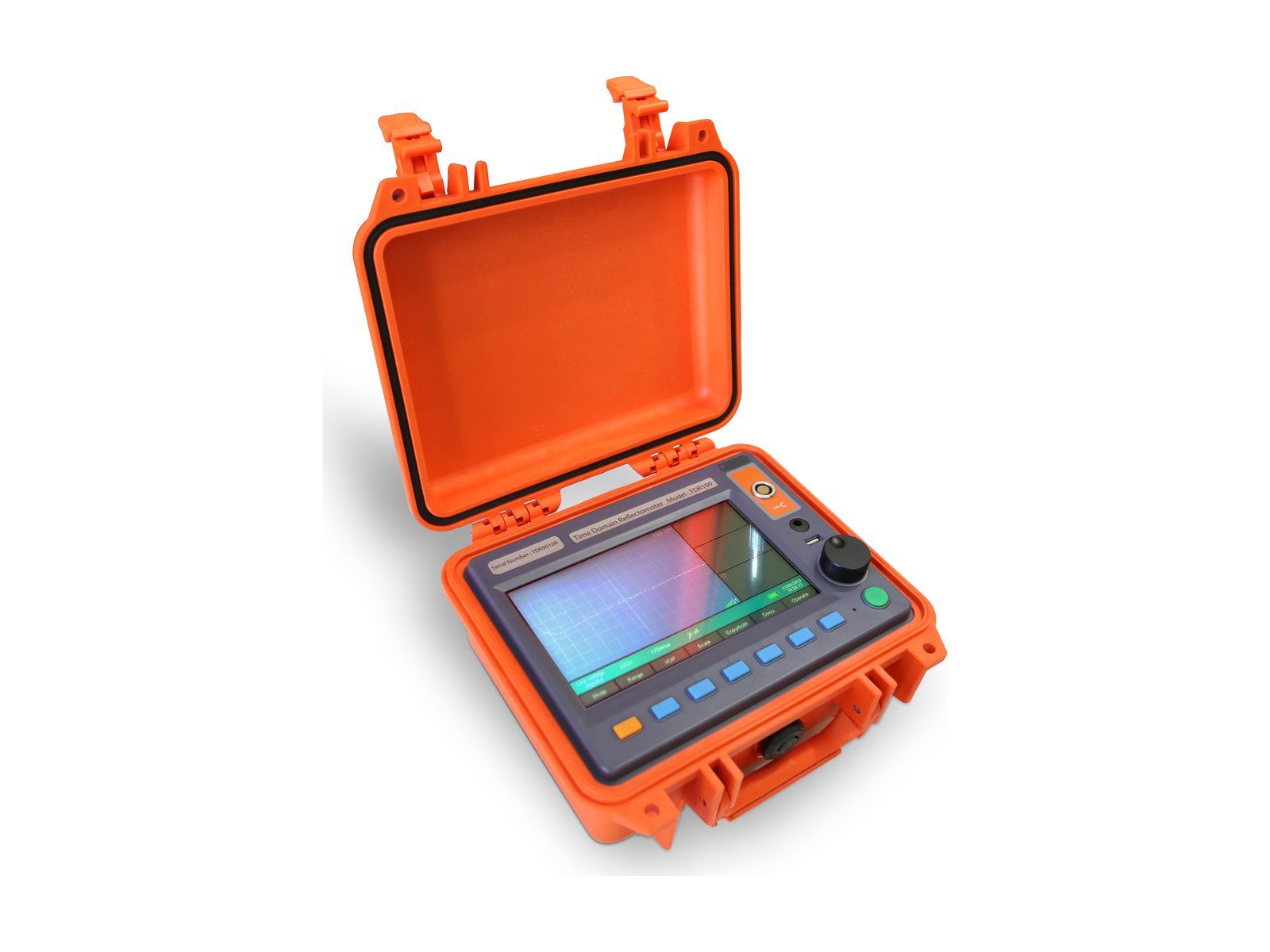
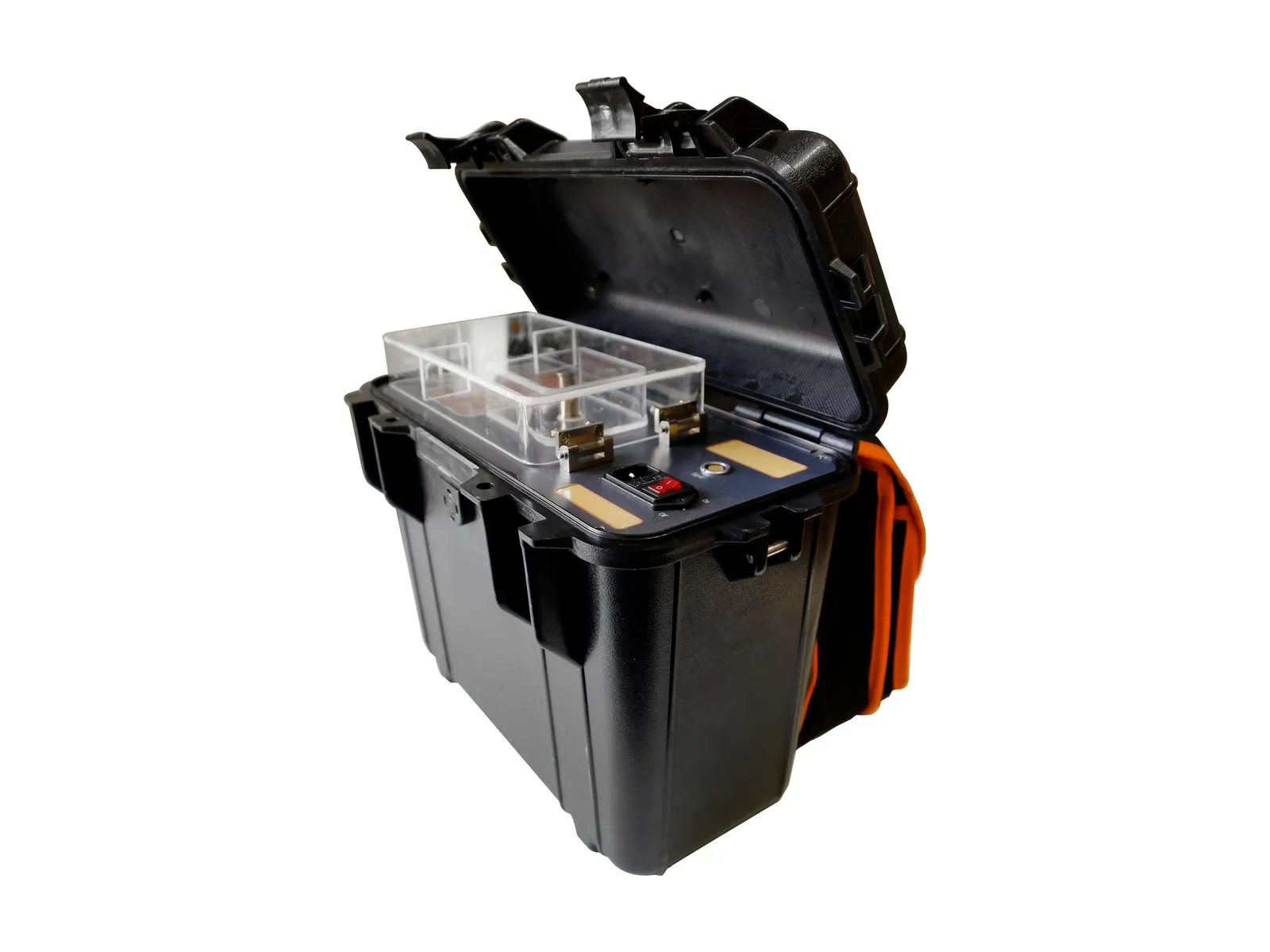
Lid open: a clear cover over the connection panel, a mains inlet with switch, and a strap-on pouch.
Step 1 of 4: Pre-location
ARM Filter Arc reflection filter
Joins the reflectometer to the surge generator, so a high-resistance fault can be pre-located while it arcs.
- Method
- Arc reflection (ARM)
- Connects
- TDR-901 and a surge generator
- For
- High-resistance and intermittent faults
- Power
- Mains inlet with switch
Where it fits
The ARM Filter belongs to step 1, but it works only together with step 2: it joins the reflectometer to the surge generator.
-
Step 1: Pre-locate
You are here- TDR-901 Time domain reflectometer
- ARM Filter Arc reflection filter
-
Step 2: Condition
-
Step 3: Pinpoint
-
Step 4: Trace route
What arc reflection does
The method in plain words, and where the ARM Filter sits.
A reflectometer sees open circuits and short circuits clearly. Many real faults are neither: a high-resistance fault reflects almost nothing, so the trace looks like a healthy cable.
The surge generator fires into the cable and the fault flashes over. A pulse sent while it arcs comes back from the fault, not from the far end. Lay the two traces over each other and they part at the fault distance.
The ARM Filter makes that timing possible. It joins the TDR-901 to the surge circuit, protecting the reflectometer from the surge while letting its pulse onto the cable.
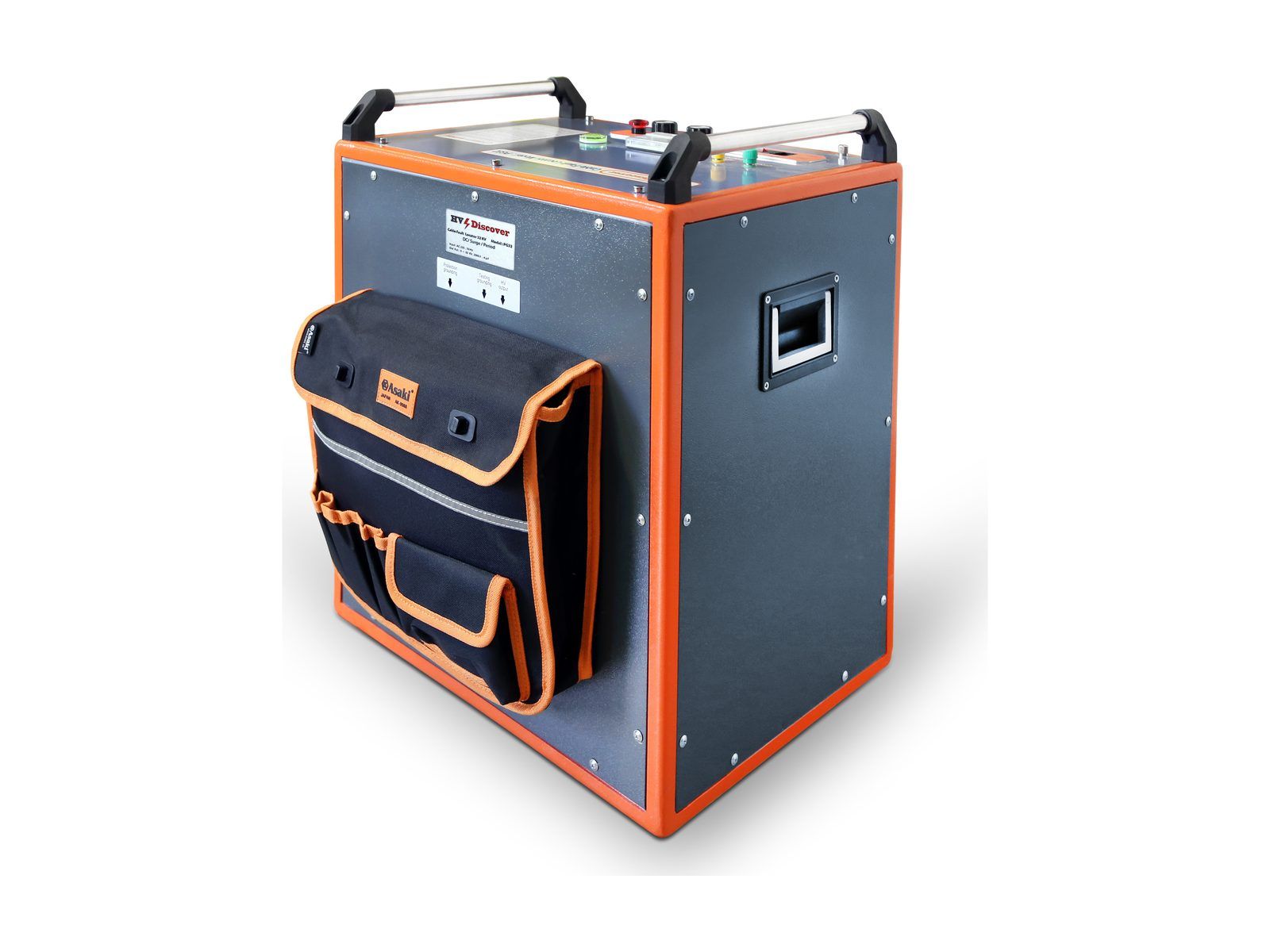
Price the ARM Filter with your set.
Tell us which reflectometer and surge generator you use, or add the TDR-901 and a PG-32 to the same quote.